
Install monitoring
The Monitoring service deploys the Prometheus server inside ADO to collect and store ADO cluster monitoring metrics, and also supports the ability to use the Grafana web application for visualization and analysis of information. This article describes steps required to add this service to an ADO cluster.
Overview
When you add the Monitoring service to an ADO cluster, node exporter is installed on all hosts. It is a monitoring agent that reads host system metrics that Prometheus will collect. Prometheus will also collect metrics from ADO services. These metrics will be available in the Prometheus format on ports and endpoints specified in service configuration settings. You can also use the Prometheus and Grafana web interfaces to view and analyze data that the monitoring service collects.
|
NOTE
|
Step 1. Add the service
-
In the ADCM interface, open the Clusters page and click your ADO cluster name. On the cluster page that opens, switch to the Services tab and click Add services.
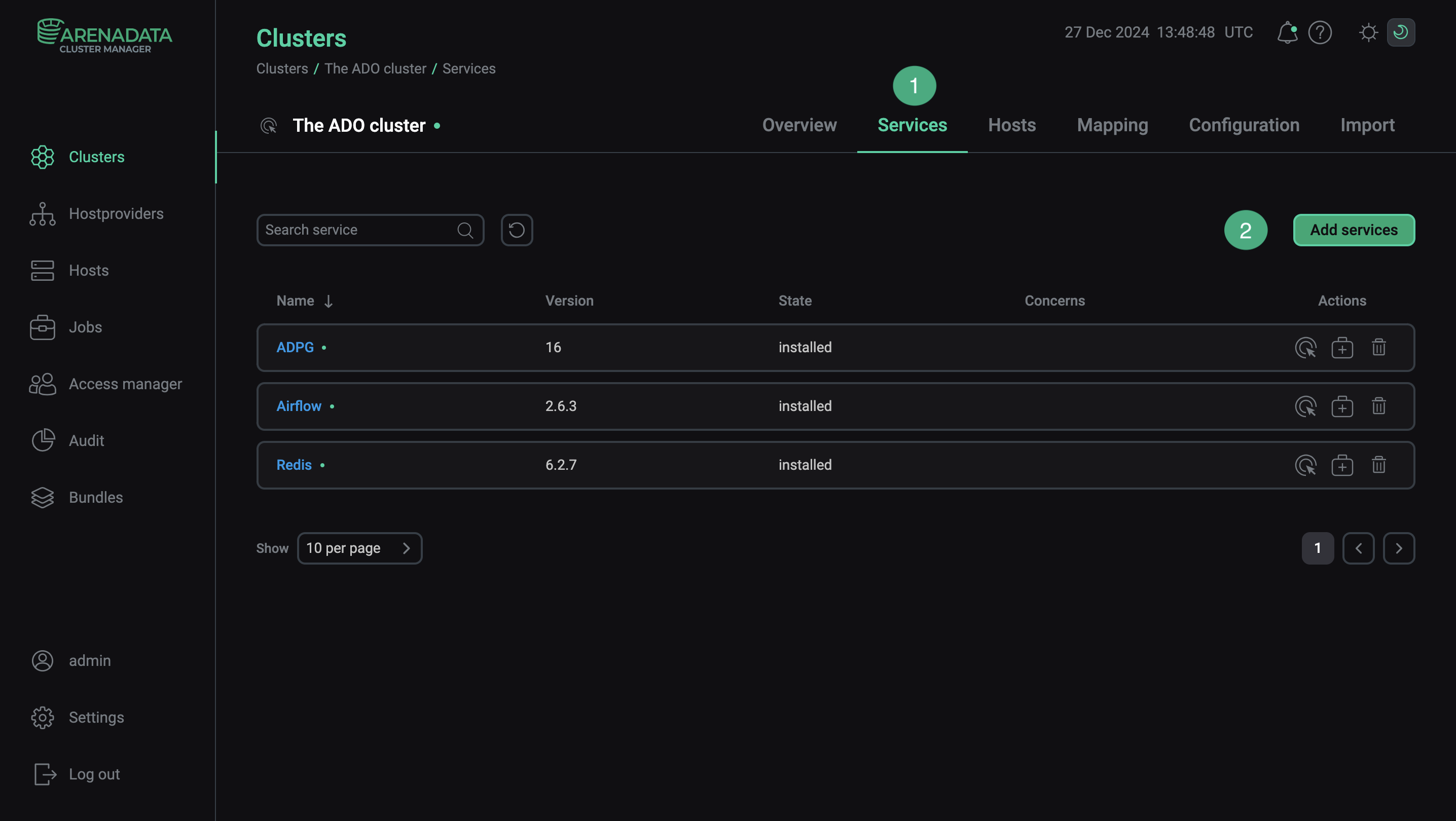 Switch to adding services
 -
In the opened dialog, select the Monitoring service and click Add.
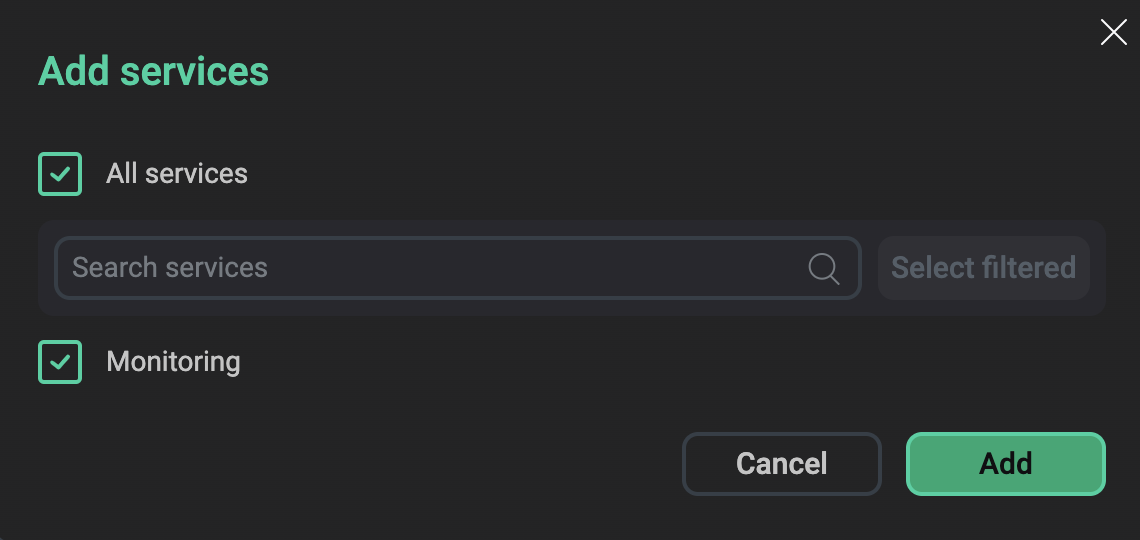 Select the service
As a result, the added service is displayed on the Services tab.
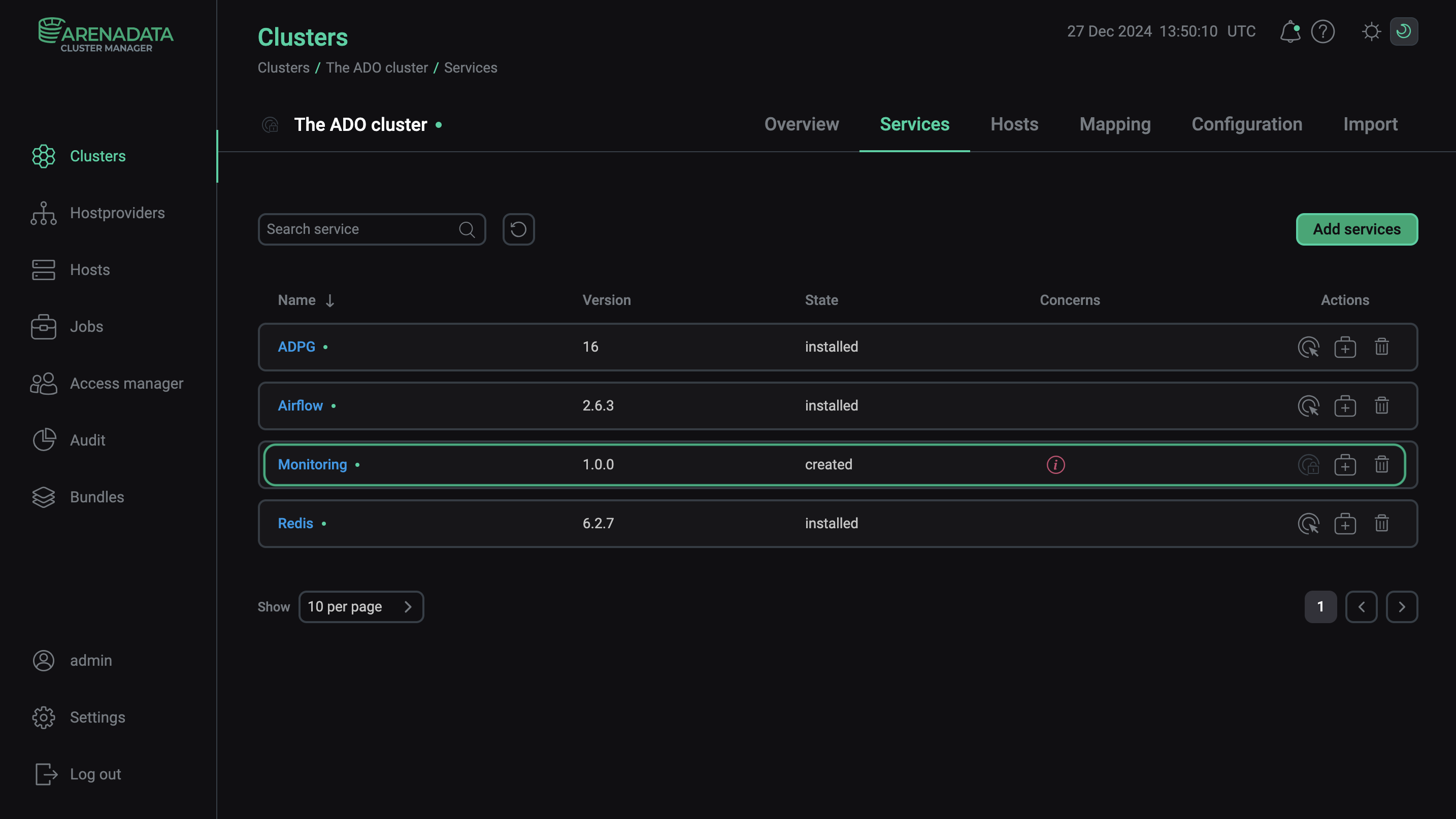 The result of successful adding the service to the cluster
Step 2. Add components
-
On the cluster page, open the Mapping tab to proceed to mapping service components to cluster hosts.
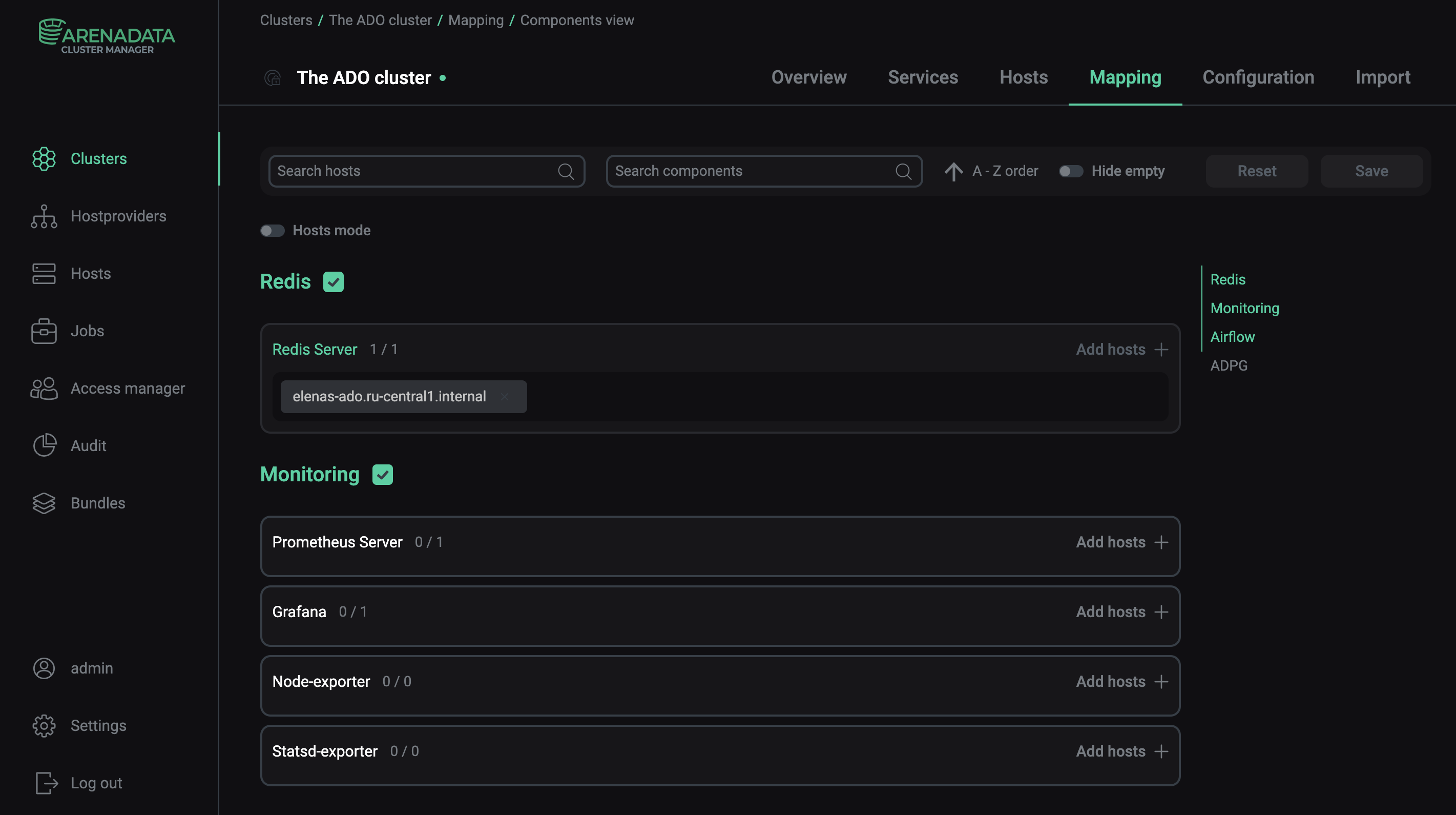 Switch to mapping service components
Each component should be installed on one host of the cluster.
Monitoring service components Component Description Prometheus Server
Deploys a Prometheus server that serves as a:
-
proxy channel for all collectors of metrics on a host;
-
storage for all metrics of a cluster;
-
generator of alerts based on collected metrics.
Grafana
Visualizes ADO metrics as graphs and charts organized into dashboards
Node Exporter
Reads host system metrics that Prometheus will collect
Statsd-exporter
Translates StatsD-style metrics to Prometheus metrics via configured mapping rules
-
-
Assign a host to each component of the Monitoring service — click Add hosts and select the desired host in the pop-up window.
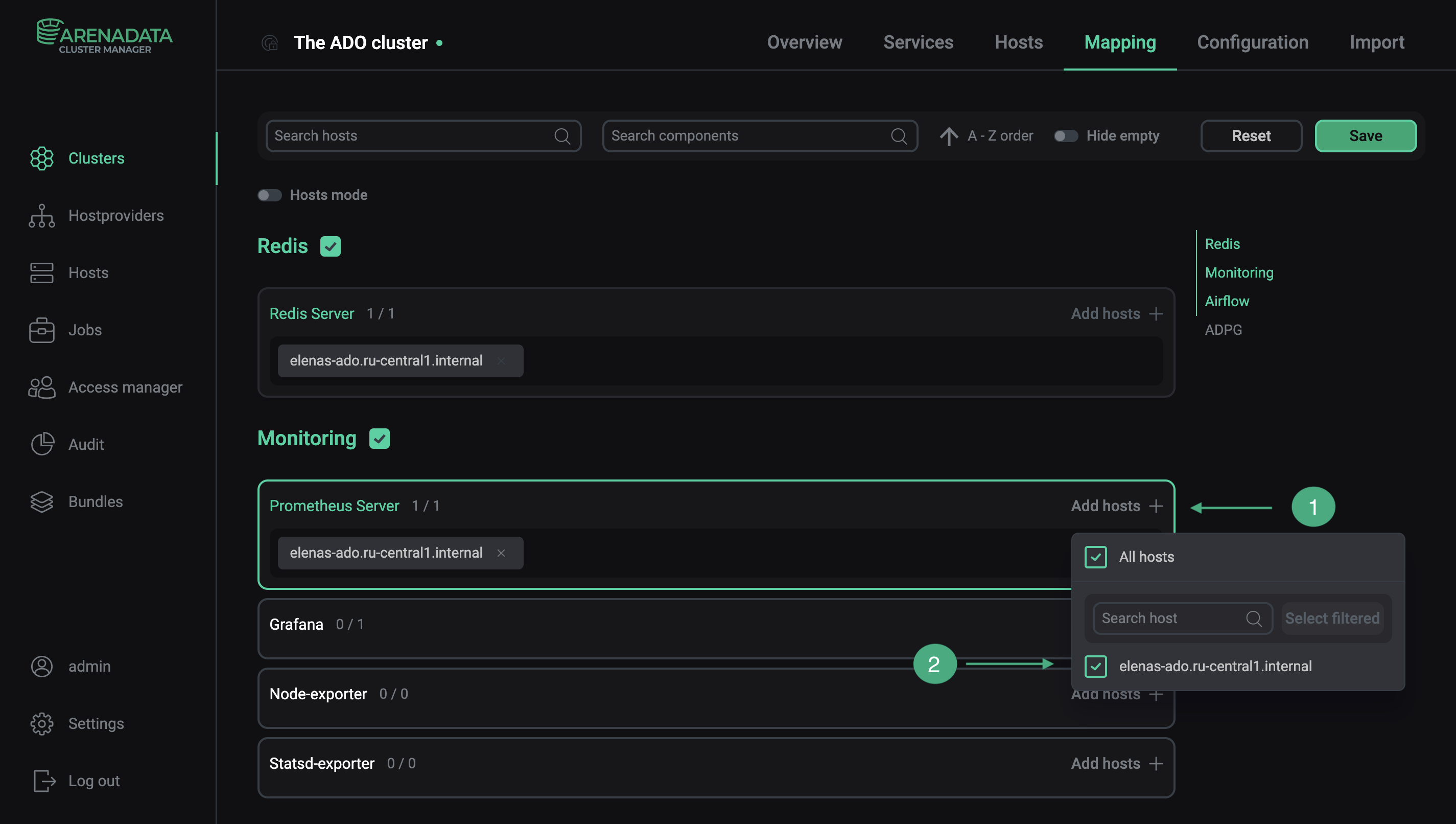 Select a host for a componentCAUTIONIt is not recommended to install the Prometheus Server on hosts with ADO — use a separate host for it. Otherwise, if an ADO host fails and/or the load on it is critically high, information about the corresponding problems will not be saved.
 -
After the distribution of components is completed, click Save.
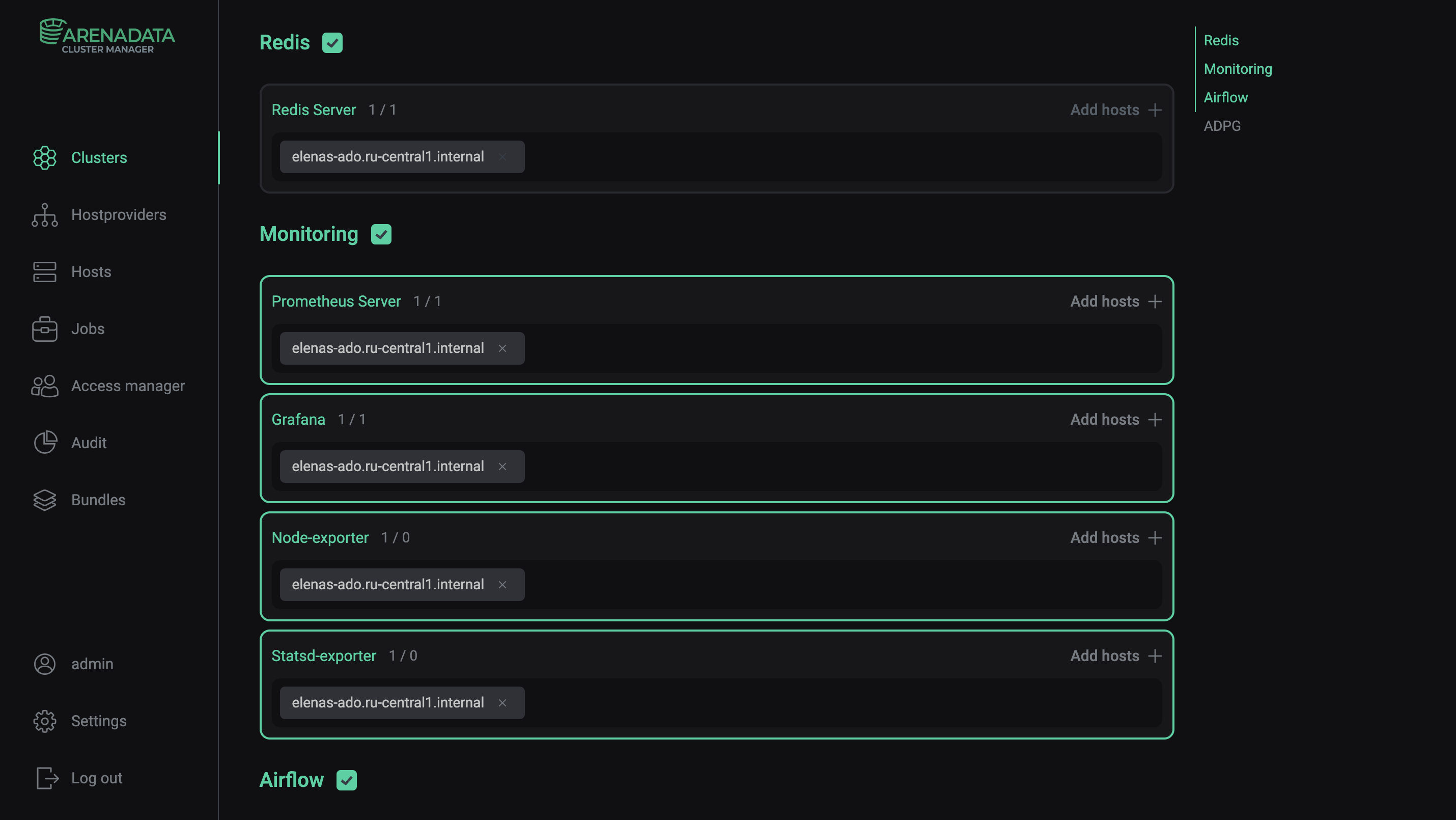 Save mapping of components
Step 3. Configure the service
-
Open the Services tab on the cluster page and click the Monitoring service name in the Name column.
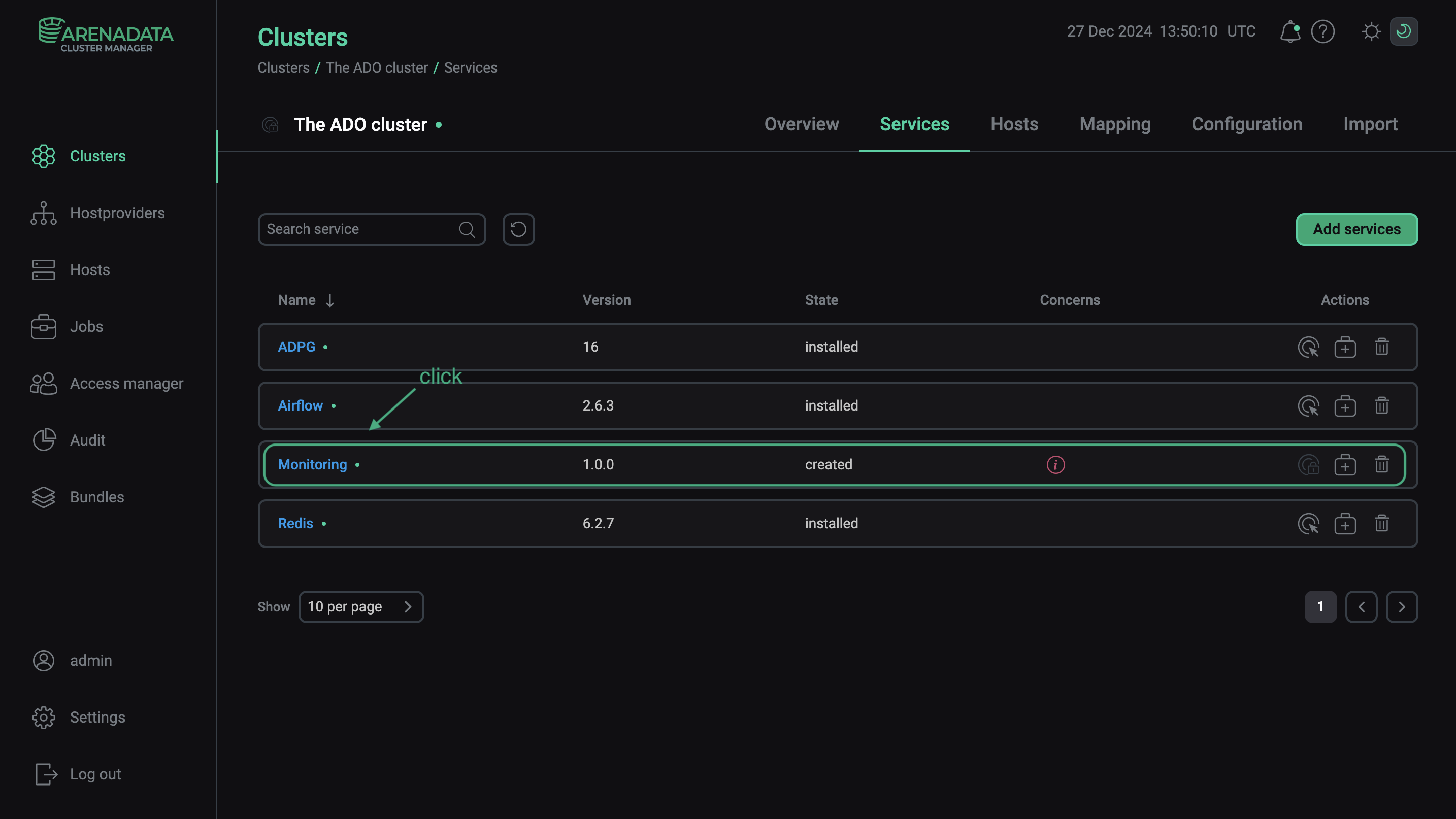 Switch to the service configuration
 -
On the page that opens, fill in the service’s configuration parameters — see Monitoring configuration parameters article for parameter descriptions. Fields highlighted in red are required.
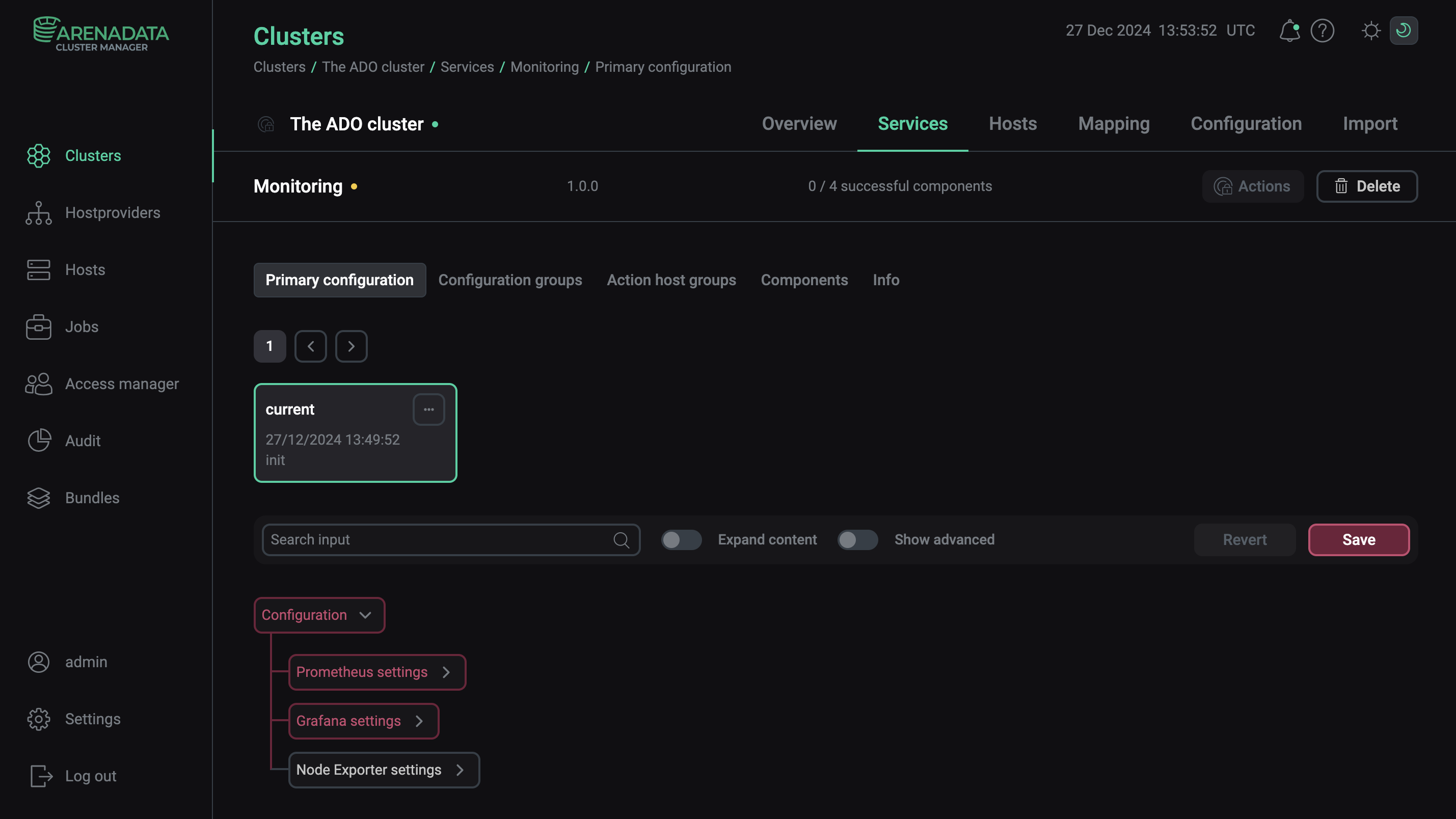 Configure the Monitoring service
After specifying all necessary parameters, click Save.
Step 4. Install the service
-
On the Services tab, click the

 icon for the Monitoring service in the Actions column and run the Install action.
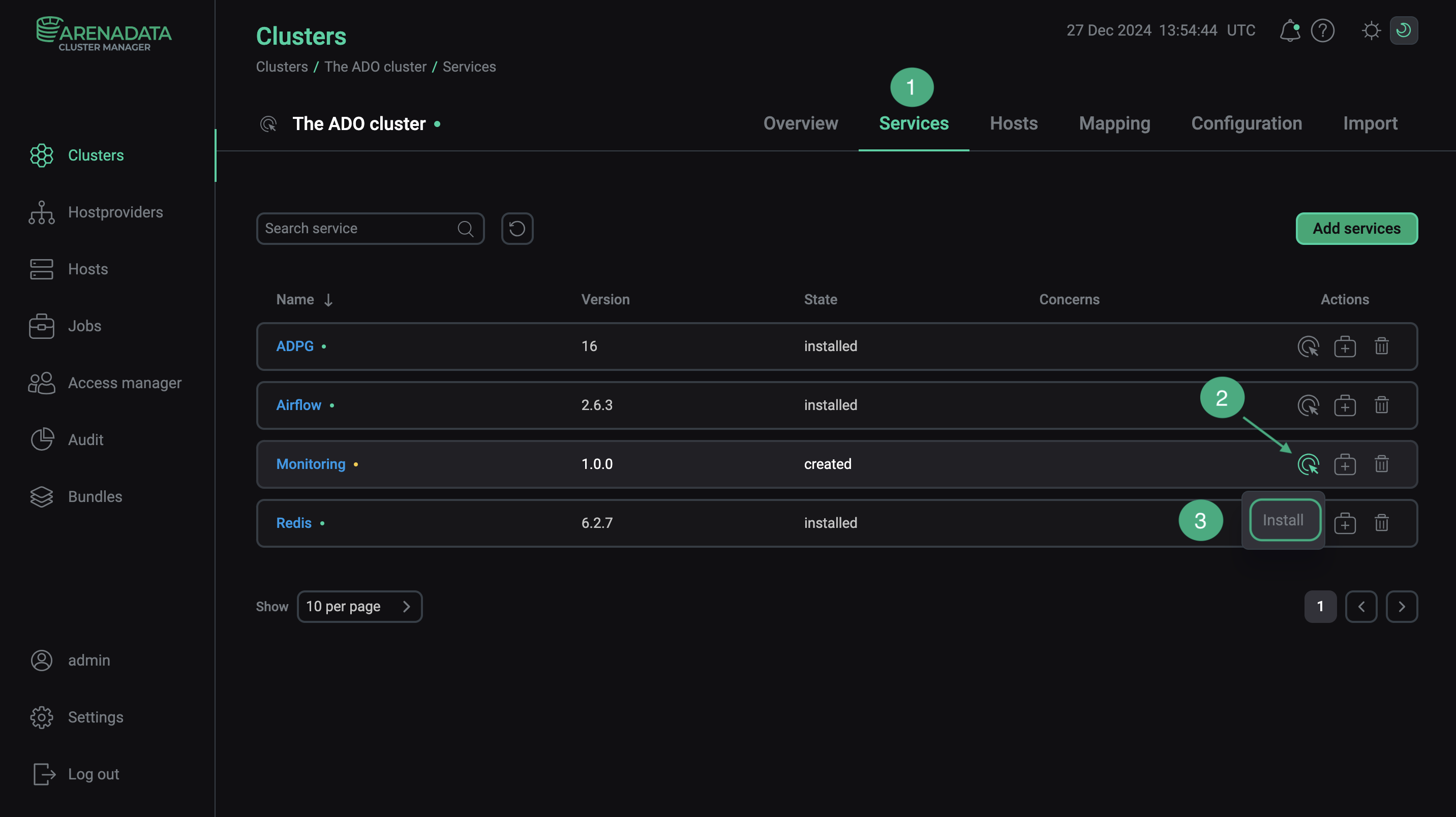 Switch to the service installation
 -
Confirm the action in the opened window.
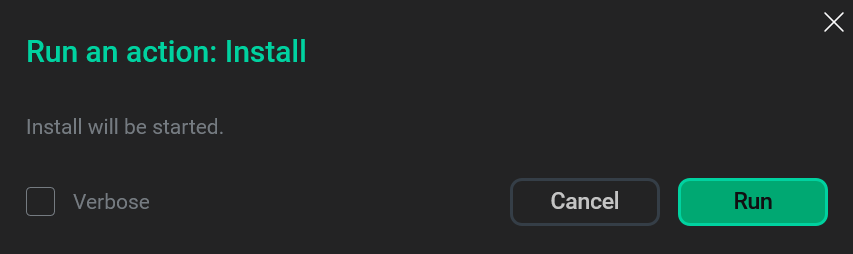 Confirm the action
 -
Wait until the installation is completed. Then check that the service state has changed from
createdtoinstalled.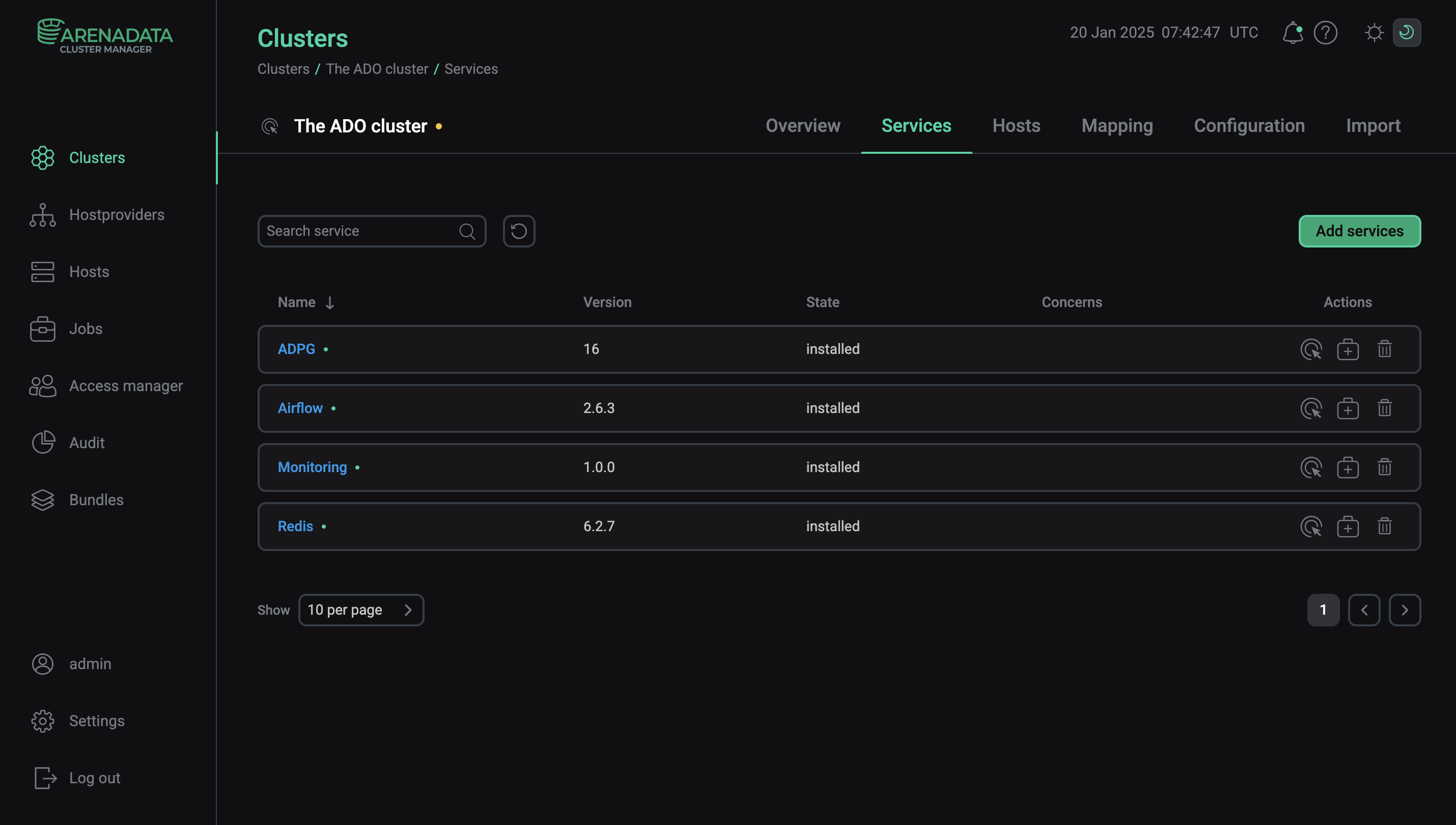 Installation is complete
To view the service installation process and analyze errors if they occur, select Jobs in the left navigation menu and click the Install job name in the Jobs list.
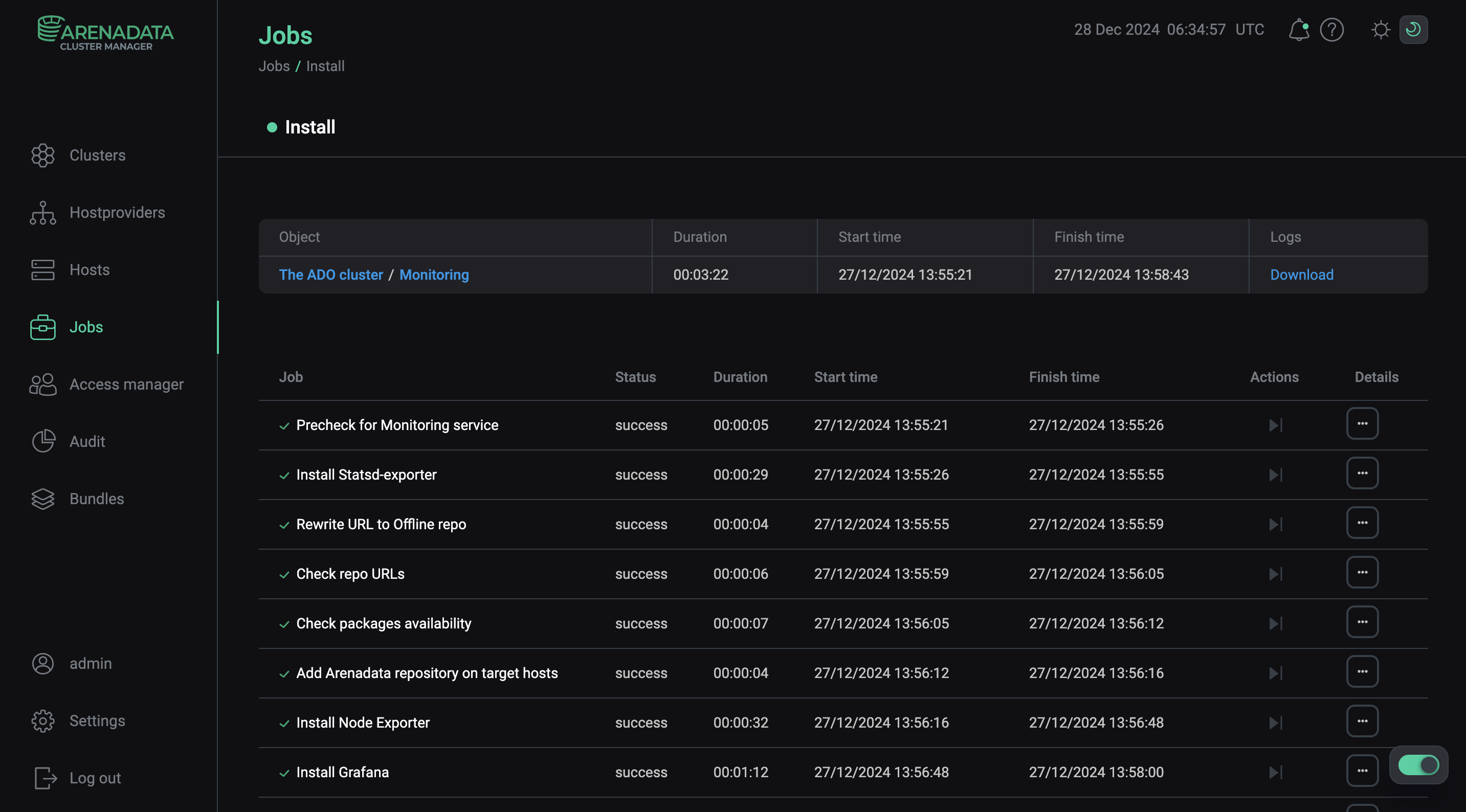 Install service job page
Step 5. View results
The Monitoring service starts automatically after the installation. To ensure that monitoring works correctly, check the following:
-
Metrics are collected from all hosts of your cluster, not only from the hosts where components of the monitoring service are deployed.
-
Both system and ADO service metrics are collected from the cluster hosts.
To check both these points, you can view metrics in the Prometheus format in the browser, and also use the Prometheus or Grafana web interface.
Metrics in the Prometheus format
-
In the address bar of your browser, enter an address of an ADO host with the specified port and endpoint to listen for service or system metrics. Port numbers and endpoints are defined in the corresponding sections on the configuration page of the Monitoring service:
-
ADO’s services metric settings — settings for access to monitoring metrics of ADO services;
-
Node Exporter settings — settings for access to system metrics of the ADO cluster hosts.
For example, http://10.92.40.107:11203/metrics is an address to view metrics of the Airflow server on a host with IP
10.92.40.107. -
-
The page that opens will display monitoring metrics from the specified host of the ADO cluster in the Prometheus format.
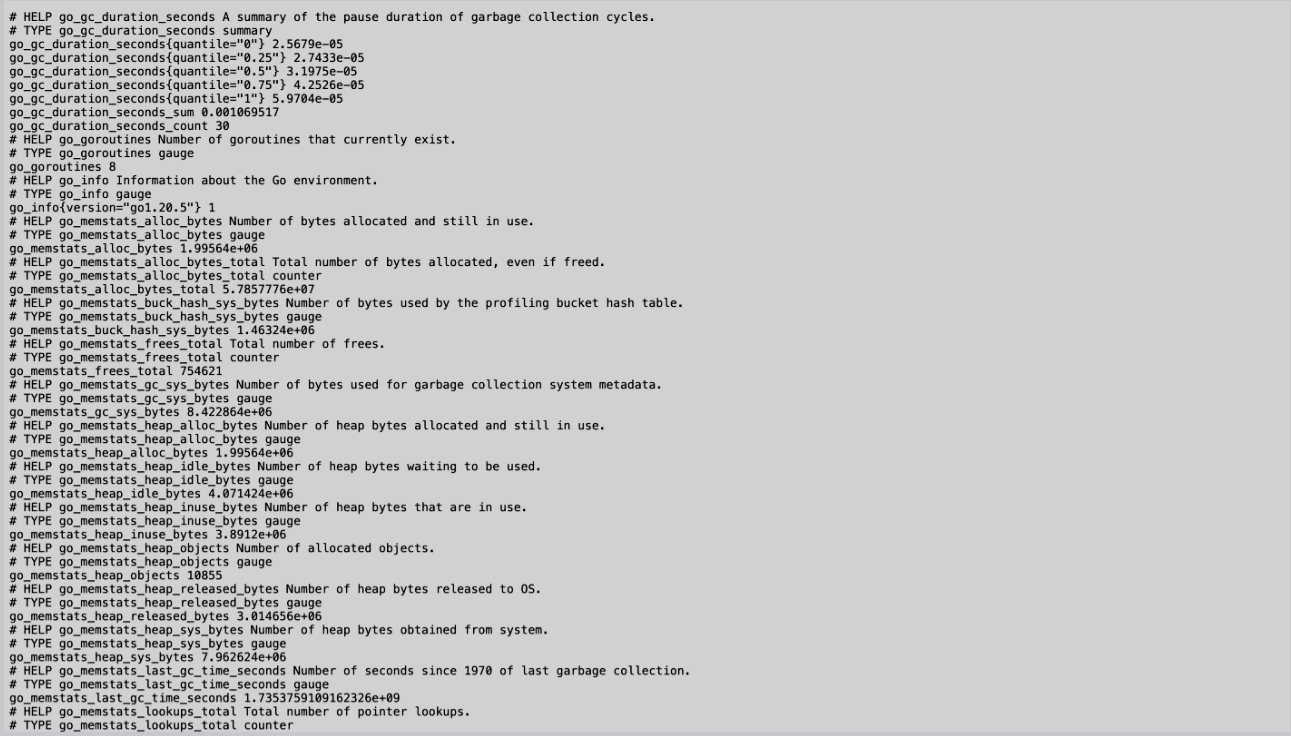
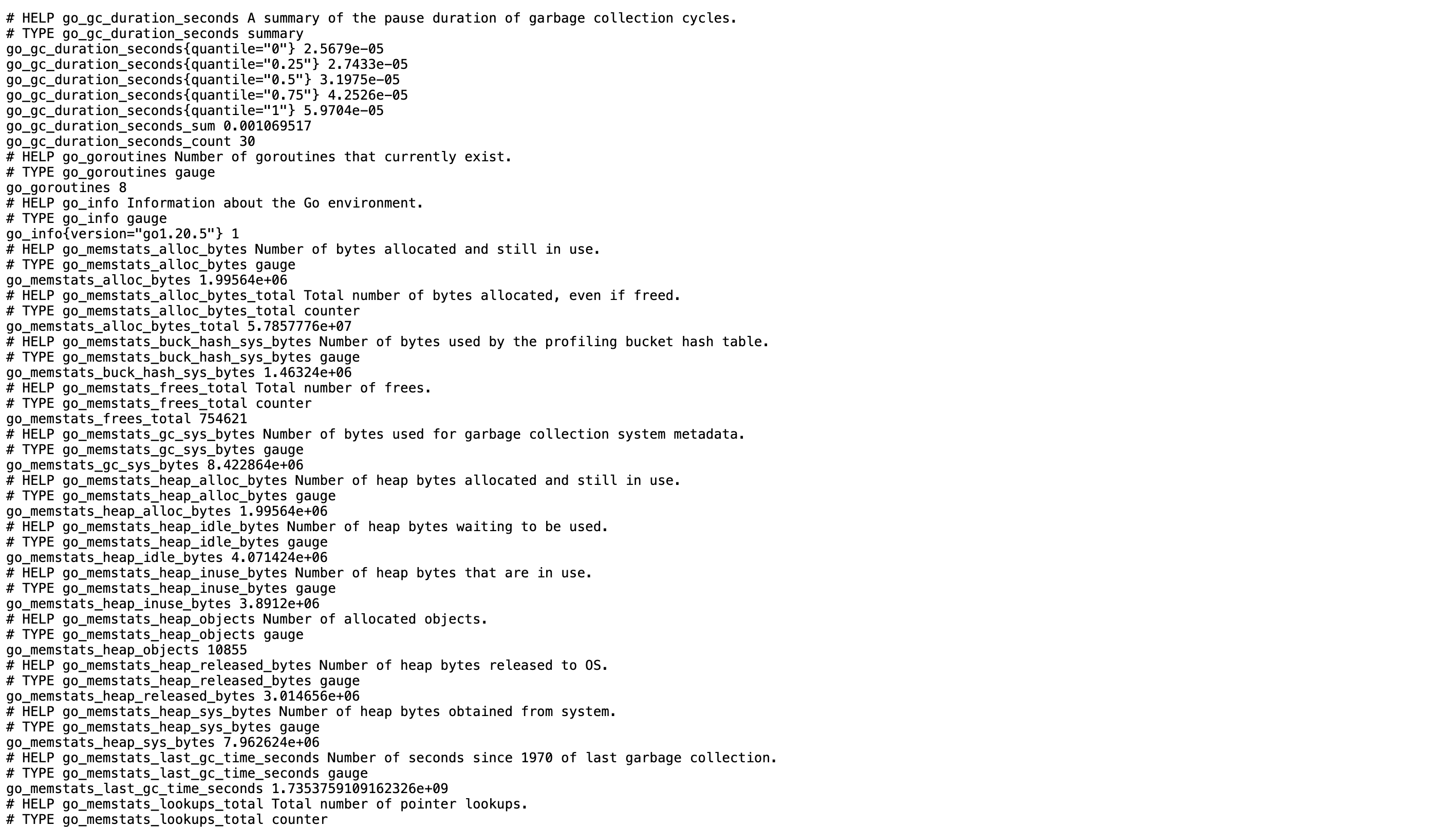
Prometheus web interface
-
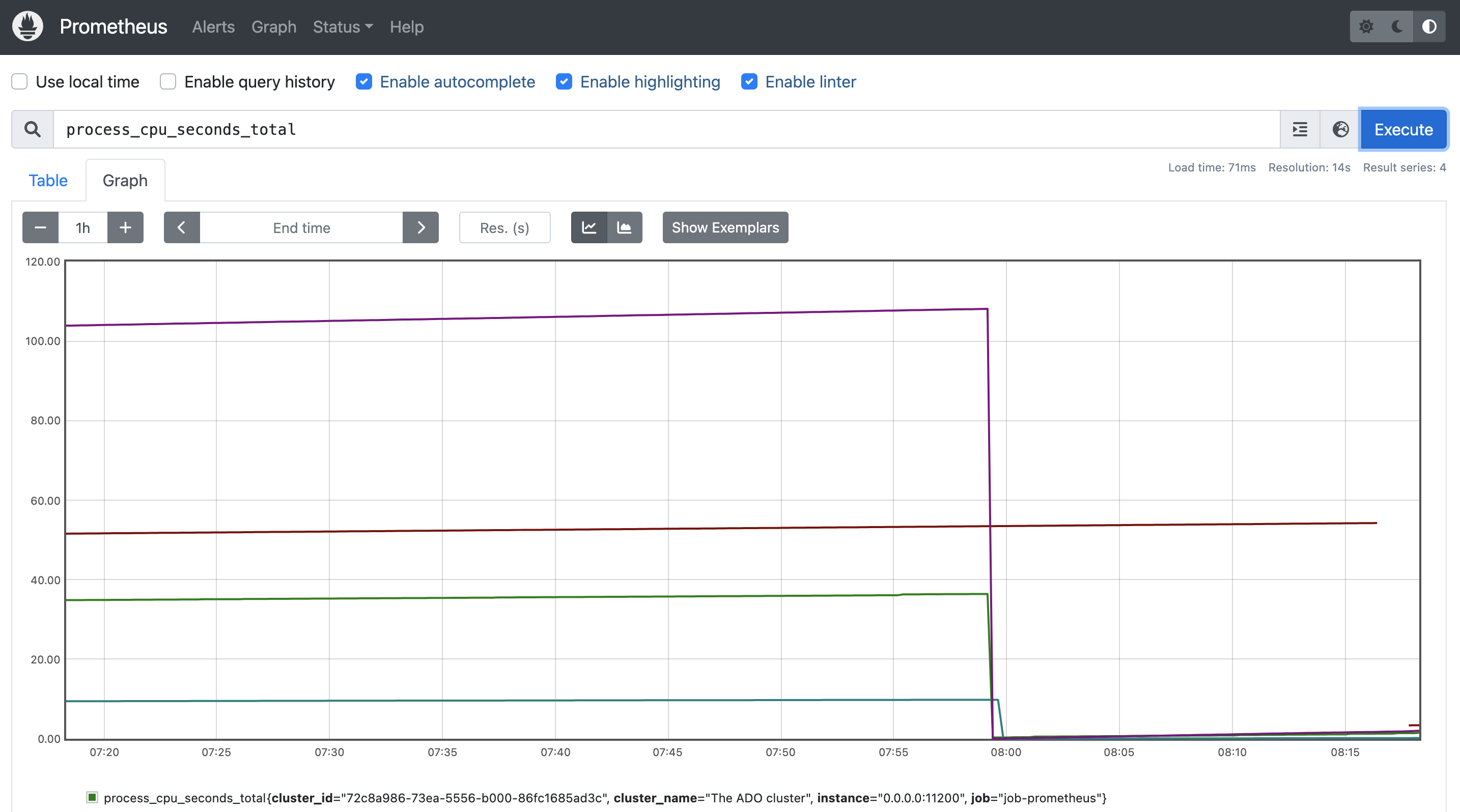
In the address bar of your browser, enter an IP address of a host where the Prometheus Server component is installed. Specify also a port number from the listen_address parameter in the Prometheus settings section of the Monitoring service configuration (the default port is
9092). For example: http://10.92.40.107:9092. To log into the Prometheus interface, use a username and password that are also specified in the Prometheus settings section — the Prometheus users to login/logout to Prometheus setting. -
In the Expression field, you can enter a metric and click Execute — values of this metric on all hosts of the ADO cluster will be shown in the interface.
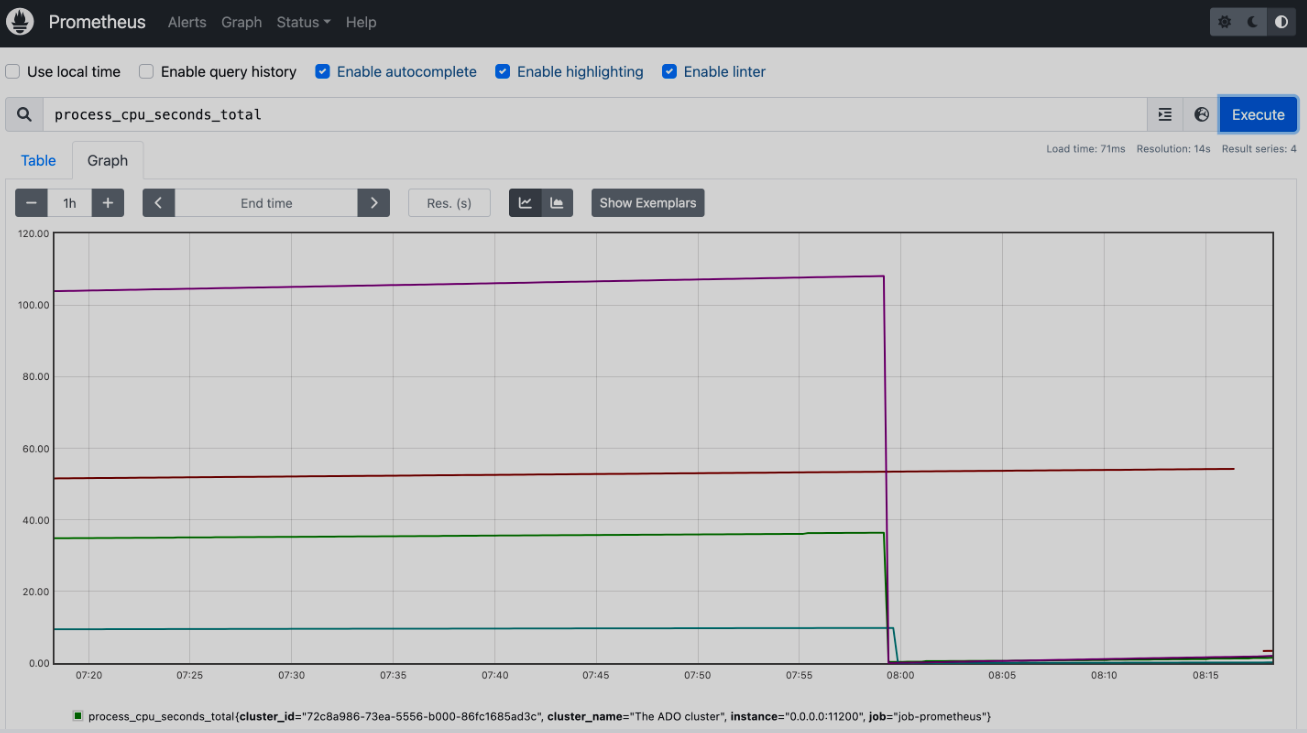
Grafana web interface
-
In the address bar of your browser, enter an address of a host on which Grafana is deployed and add a port number — the value of the Grafana listen port parameter located in the Grafana settings section of the Monitoring service configuration (the default value is
3000). For example, http://10.92.40.107:3000. To log in, useadminas a username, and the Grafana administrator’s password parameter value (also found in the Grafana settings section of service configuration parameters) as a password. -
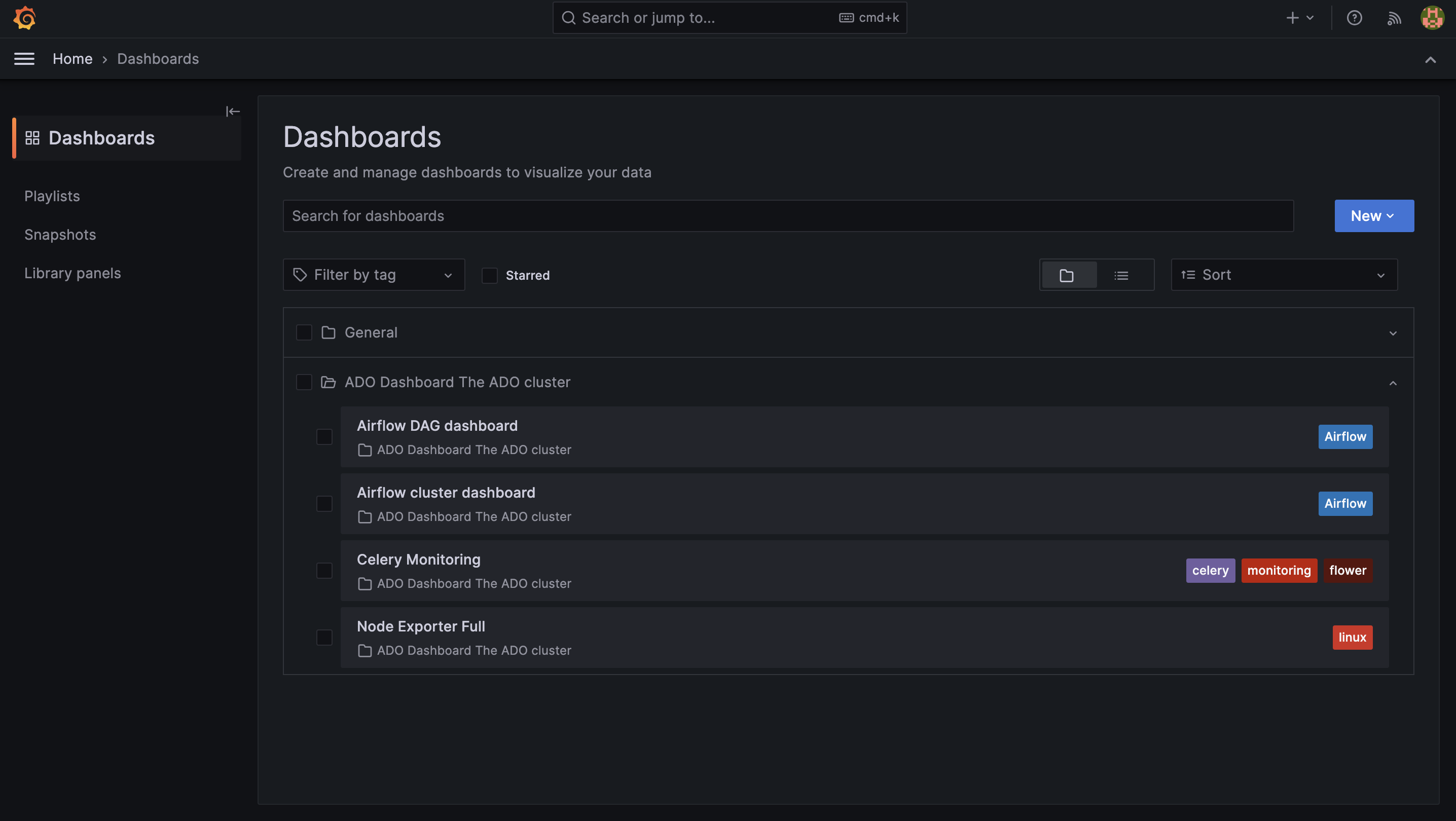
In the window that opens, navigate to Home → Dashboards and expand the ADO Dashboard <ADO_cluster_name> section. In this section, you can select one of available dashboards to view service or system metrics coming from your ADO cluster.