

ADP ES overview
Arenadata Prosperity Enterprise Services (ADP ES) — ADP/PostgreSQL cluster management solution that simplifies administration, backups, and optimization of ADP databases.
Features
ADP ES has the following key features:
-
visual representation of a cluster topology, host statuses, and their roles (leader/replica) in the high availability architecture;
-
cluster backup and recovery management;
-
the calculation of optimal values for cluster configuration parameters based on the application profile, hardware, and maximum number of connections.
Architecture
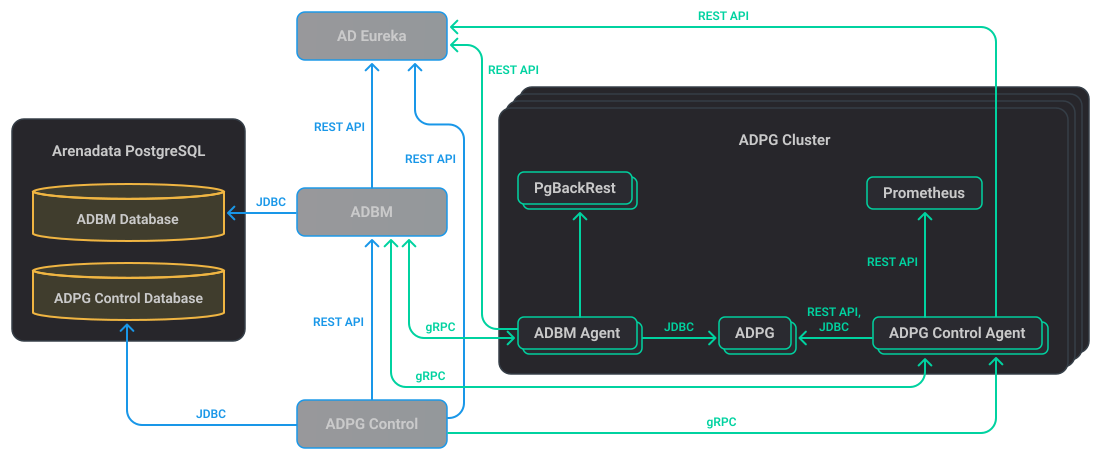
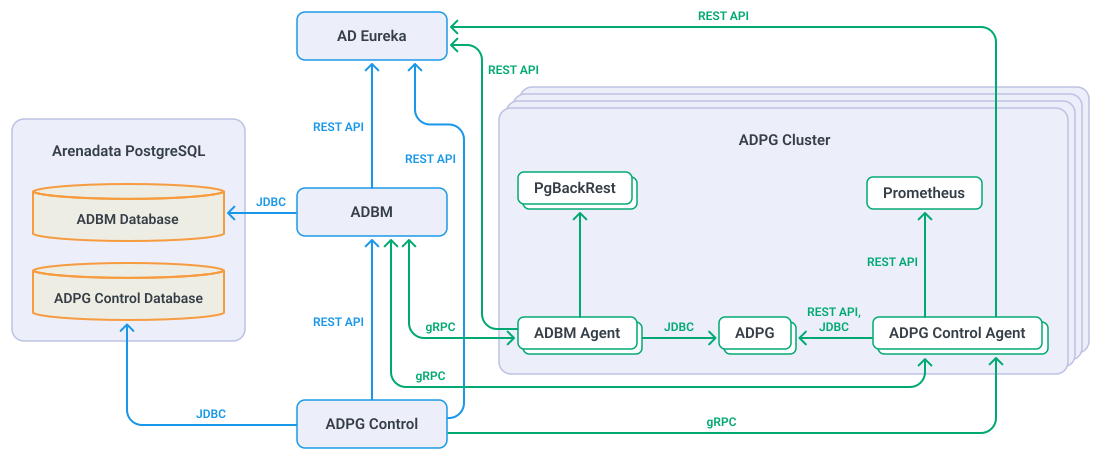
The ADP ES architecture is shown in the diagram below. Blue arrows indicate interaction within the ADP ES cluster, green arrows show interaction within ADP clusters and inter-cluster interaction.
Basic components:
-
ADP Control — the main service that implements the ADP ES functionality.
-
ADBM — a fault-tolerant backup management system that is built on the base of pgbackrest and provides the following capabilities:
-
Configure backup policies including separate schedules for different backup types.
-
Create database backups according to the configured schedule and manually.
-
Maintain a list of backups with the ability to search for them and view details.
-
Clean up backups according to existing policies on a schedule and manually.
-
Log backup operations.
-
Work with multiple ADP clusters.
-
Support S3-, CIFS-, and Posix-compatible backup storages.
-
-
AD Eureka is responsible for service discovery in ADP ES. It discovers available agents and finds required services to send responses. When you add an ADP cluster, new agents are also registered via AD Eureka. It is implemented based on Spring Eureka Server.
-
Arenadata PostgreSQL stores metadata of the ADBM and ADP Control services.
-
ADBM Agent provides the interaction between the ADBM service and ADP clusters. ADBM agents are installed on each cluster host with the ADPG service. They are responsible for managing the configuration and running the necessary
pgbackrestcommands. The ADBM agents use the gRPC protocol to transmit data to the ADBM service. -
ADP Control Agent receives host metrics from Prometheus and interacts with Patroni using the REST API.
The ADBM and ADP Control Agent are deployed on the side of an ADP cluster.